How to choose between sliding and hinged doors or windows
A practical reading of how opening style affects daily use, spatial efficiency and façade expression.
Opening style is both architectural and operational
Doors and windows are not just apertures. They shape circulation, views, ventilation, façade character and how the room feels in use. That is why the decision should not be based on appearance alone.
When sliding systems are a strong fit
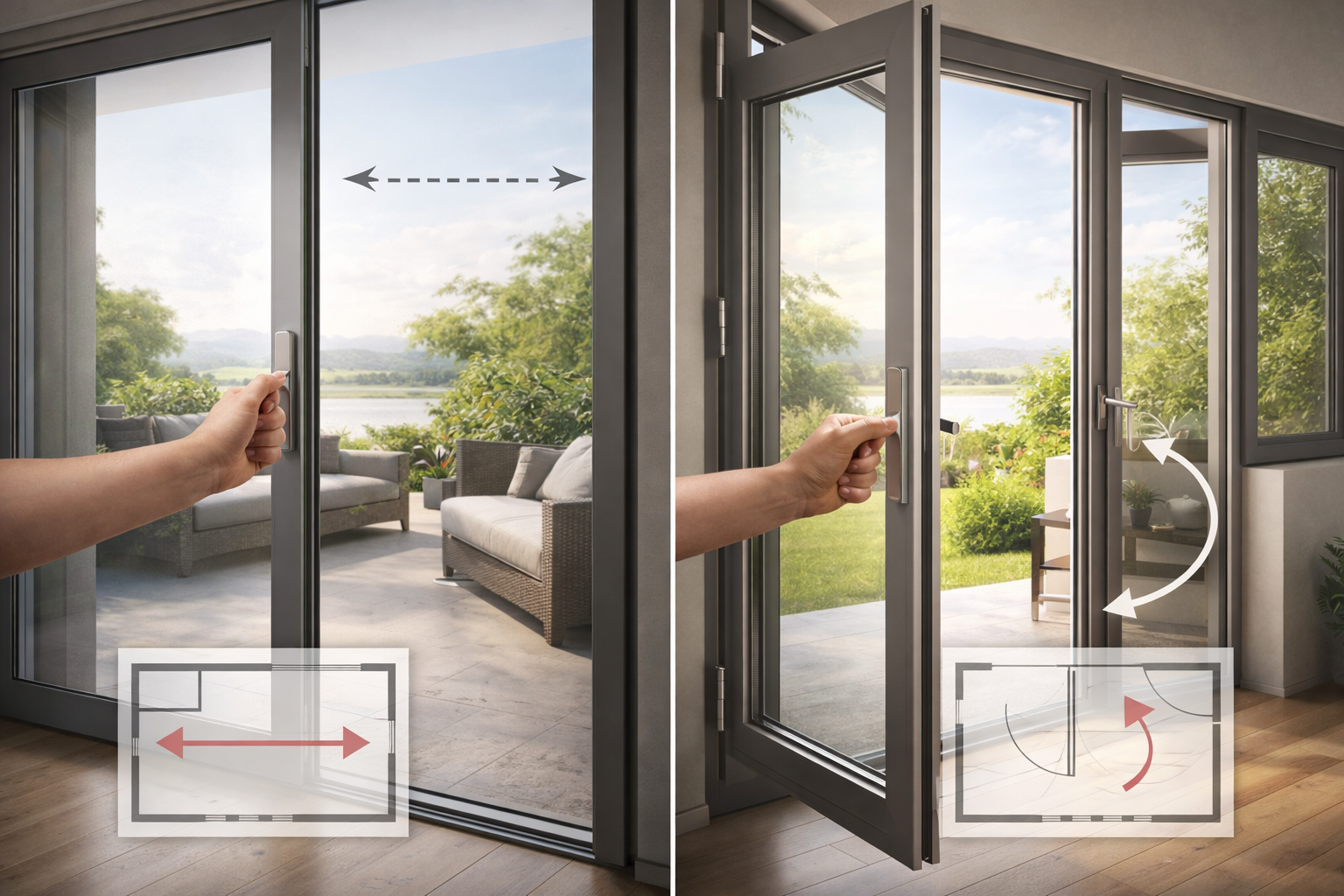
Sliding systems work well when:
- the opening is wide,
- the view is important,
- interior space should remain unobstructed,
- and the project is aiming for a calm, contemporary façade.
For garden-facing spaces or large glazed walls, sliding systems often create the cleanest connection to the exterior.
When hinged systems are better
Hinged systems can be more practical for smaller rooms or openings that need direct and simple ventilation. They also support multiple behaviours such as tilt-and-turn or partial opening depending on the selected configuration.
What should be reviewed before recommendation?
| Factor | Why it matters |
|---|---|
| Opening width | Helps determine whether sliding logic is more efficient |
| Room use | Affects furniture placement and circulation |
| Importance of the view | Influences how much visible framing is acceptable |
| Façade language | Determines whether the opening should read as integrated or expressive |
The correct answer
There is no universally better system. The right answer is the one that matches the opening, the spatial use and the architectural intention of the project.