When is a monobloc system the better choice?
A practical look at monobloc systems and when they outperform separate window, shutter and insect screen treatments.
What is a monobloc system?
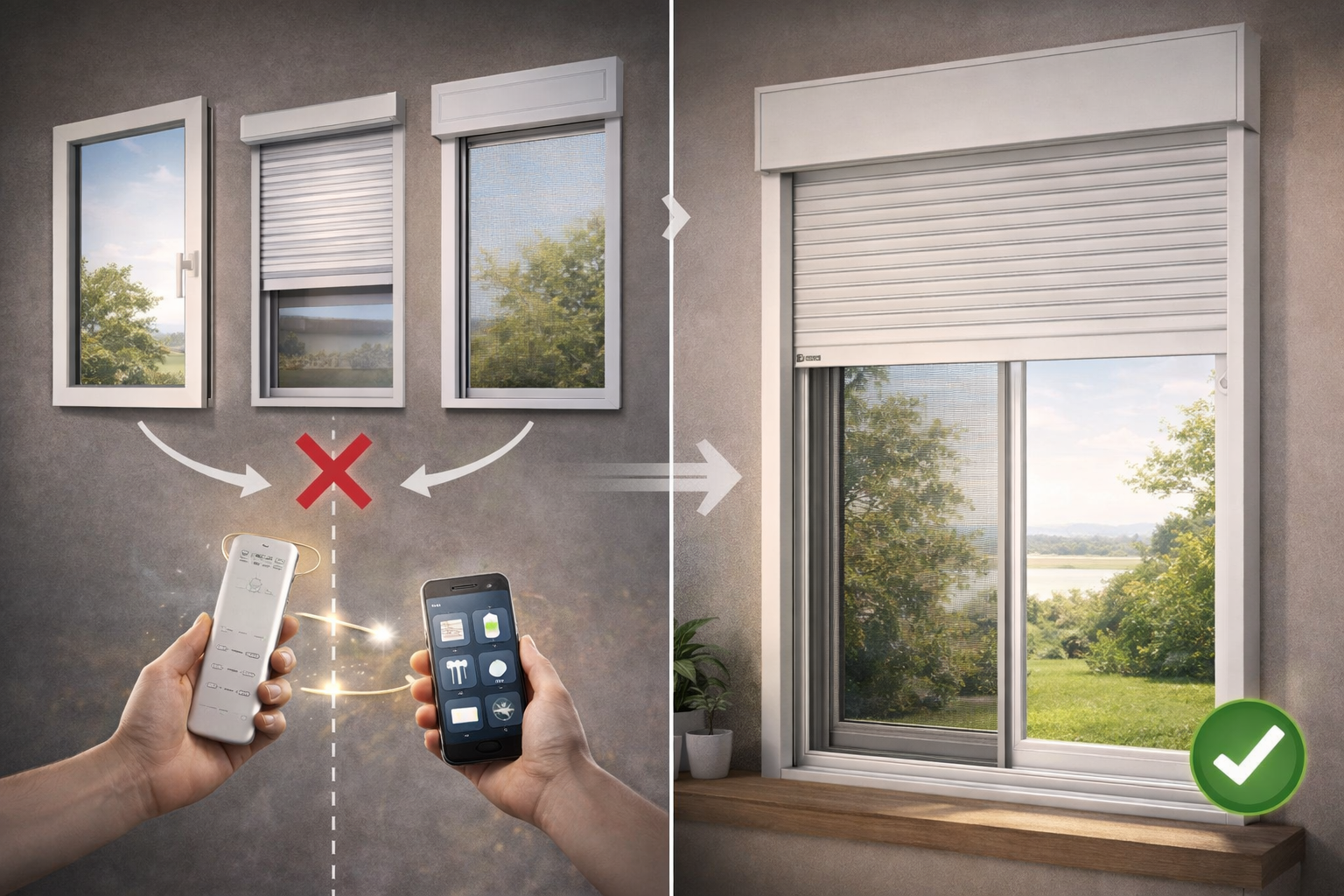
A monobloc system packages the window, roller shutter and insect screen into one coordinated assembly. The benefit is not only physical integration. It also creates better consistency in performance, detailing and installation.
Why designers and owners value it
The main advantage is clarity from the start. Instead of solving each element separately, the opening is treated as one organised package. That usually reduces site conflicts and leads to a more disciplined façade result.
Key benefits include:
- fewer fragmented details around the opening,
- stronger coordination between window and shutter,
- cleaner installation logic,
- and an easier route to combining protection, privacy and ventilation.
Projects where monobloc works well
New construction
In a new build, the system can be integrated early into the design process. That gives the team greater control over how the opening reads on the façade and how clean the surrounding details feel.
Openings that need layered protection
When the client needs a good-performing window, roller shutter and insect protection together, a monobloc system is often more coherent than separate installations.
Is it always the right answer?
Not necessarily. In some renovation scenarios or projects with fixed site constraints, separate systems may offer more flexibility. The correct answer depends on the project condition rather than on a universal preference.
How to evaluate the decision
We usually assess four points:
- whether the project is new or existing,
- how sensitive the façade detail is,
- whether insect protection is required within the same opening,
- and how important visual order and long-term convenience are.
Final take
Monobloc is not just a premium label. It is a rational option when integration, tidy detailing and execution clarity are the real priorities.