How to choose the right roller shutter system for your openings
A practical guide to understanding the difference between manual and electric shutters and how dimensions, slats and installation logic affect the result.
Why the shutter decision matters
A roller shutter is not just an accessory. It directly affects privacy, light control, day-to-day convenience and the perceived comfort of the room. That is why it should be evaluated as part of the opening design rather than as a late add-on.
In residential projects, the difference is especially visible when the system has been selected early and coordinated with the opening dimensions and façade language.
Manual versus electric shutters
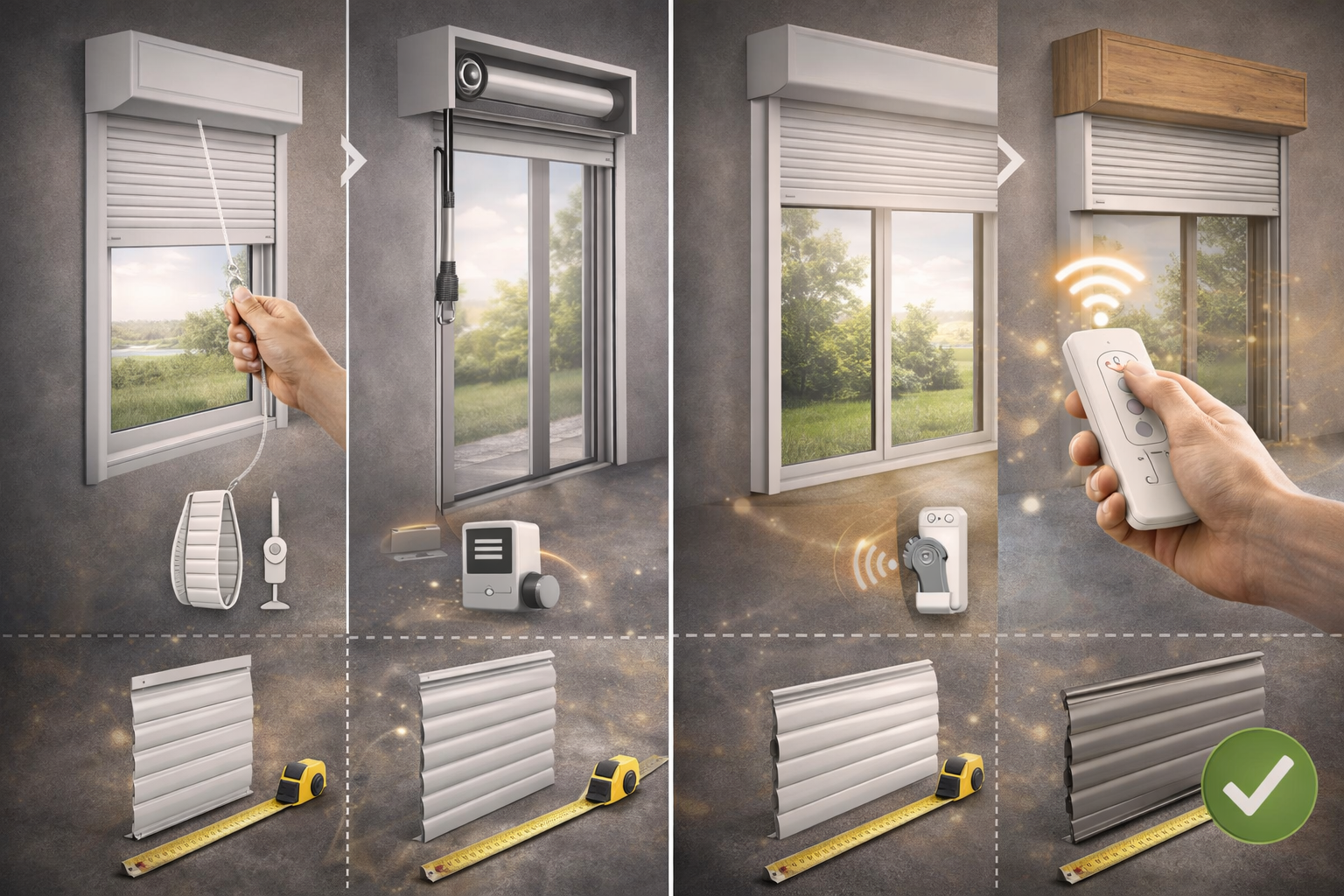
Manual shutters are often suitable for simpler openings, limited daily operation and projects where a straightforward solution is preferred. Electric shutters become more compelling when:
- the openings are large or repeated,
- comfort is a major priority,
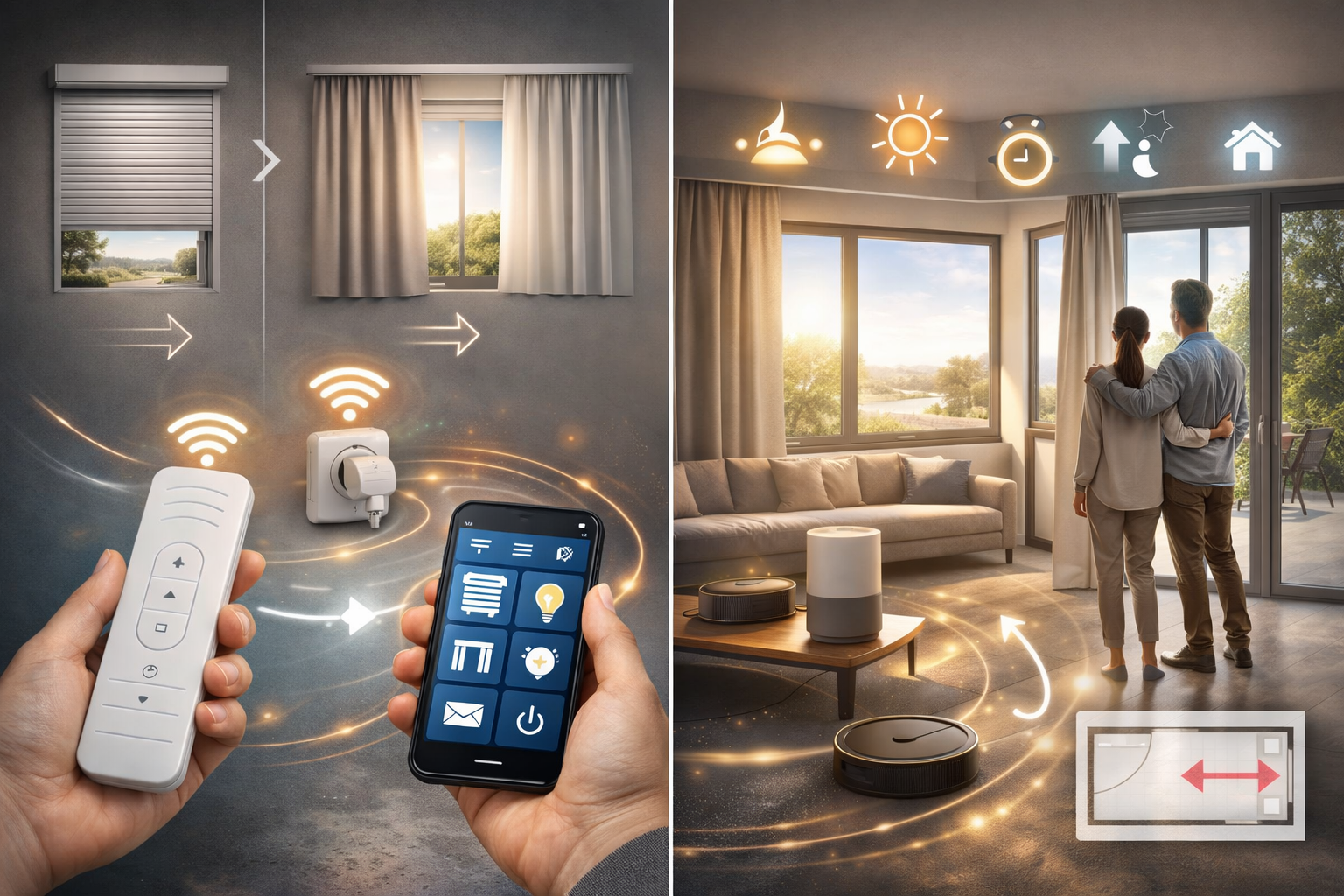
- the client wants remote or smart control,
- or the project is aiming for a higher level of everyday convenience.
When electric shutters make sense
For villas and façades with multiple openings, motorised control usually improves the user experience. It also creates a stronger base for grouped controls or future automation.
When manual shutters are enough
If the opening is uncomplicated and the operational demand is modest, a well-selected manual shutter can still deliver a dependable and refined outcome.
Core selection criteria
There are four parameters we always review before confirming the system:
- Slat type: thickness, weight and insulation behaviour matter.
- Opening dimensions: size influences slat choice, shaft selection and motor sizing.
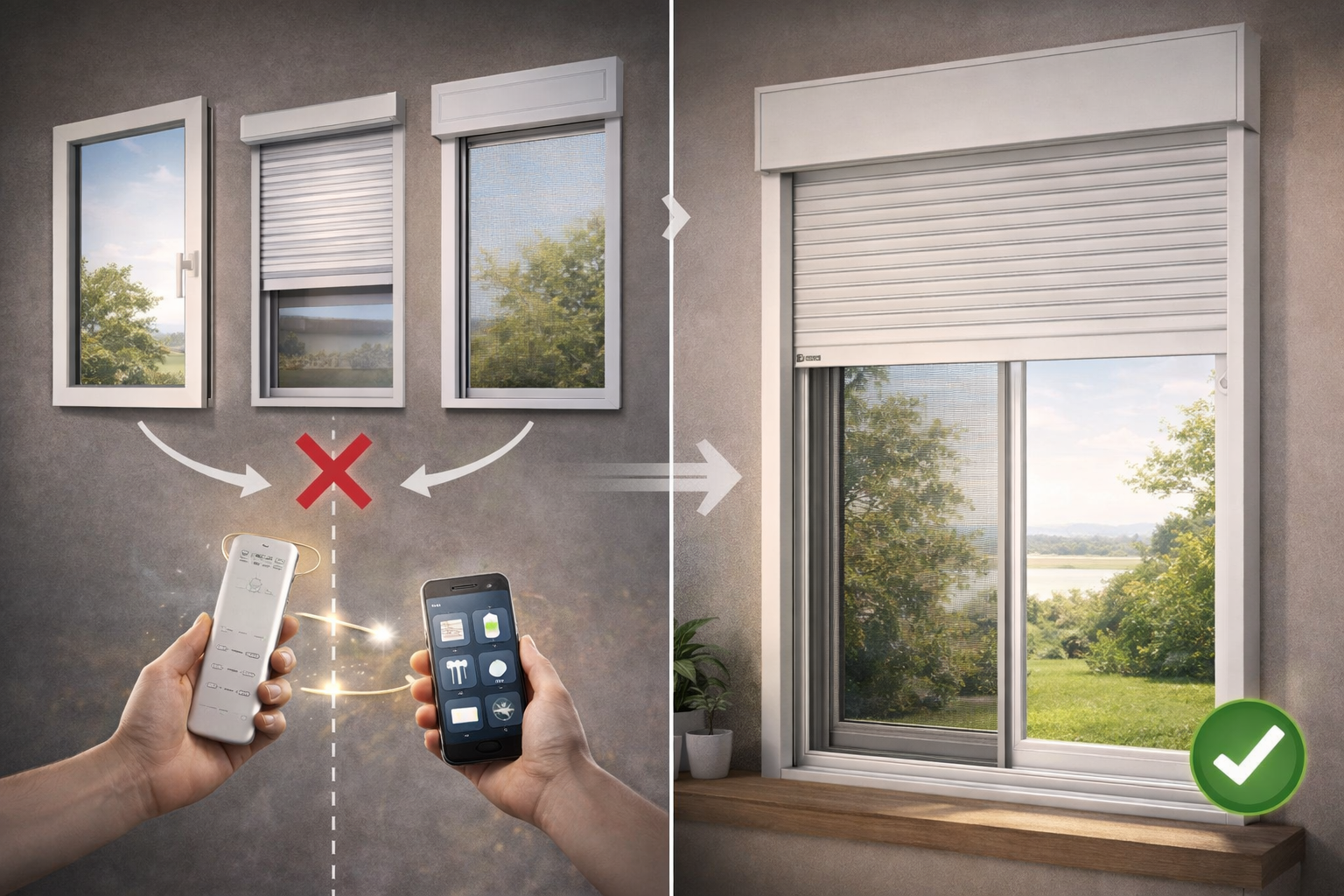
- Installation strategy: built-in, exposed or integrated with aluminium.
- Control method: manual, wall switch, remote control or smart integration.
Why installation strategy changes the final appearance
In many projects, the biggest visual difference is not the shutter itself but how it sits within the façade. A concealed box, an aluminium-integrated detail or a monobloc solution can dramatically improve the final architectural expression.
Practical recommendation
If the project is still at design stage, study the shutter system early. Early coordination usually produces cleaner details, better execution and a more coherent final result.