Smart automation scenarios for shutters and blinds: where to start
How shutter and blind systems move from isolated operation to a smoother daily experience through smart automation.
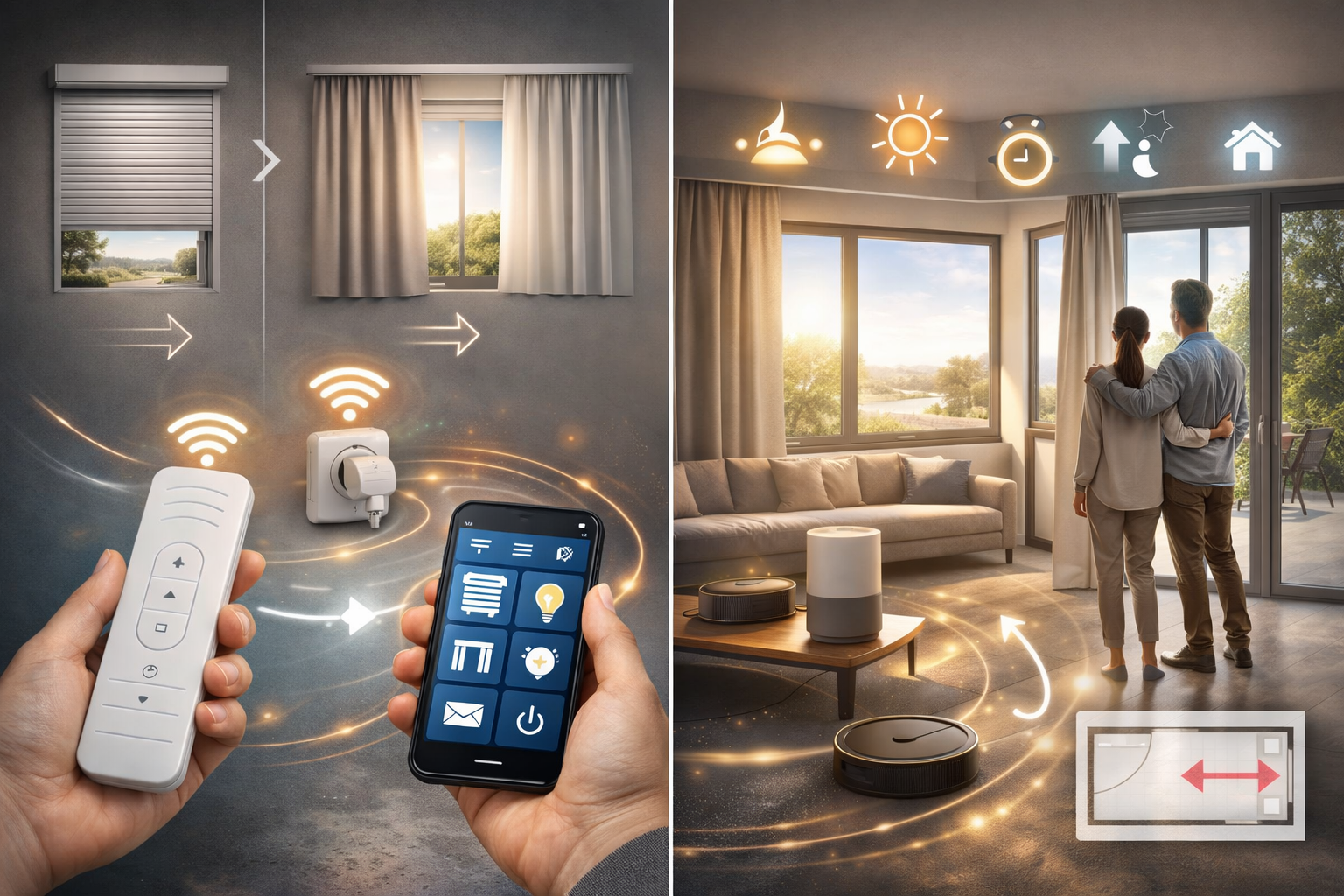
Automation is more than a remote control
Many people assume automation simply means a handset or a mobile app. In practice, the real value appears when different systems can operate together in a way that supports the daily rhythm of the building.
What can be grouped into one scenario?
In a residential setting, one smart scene might include:
- lowering the shutters at sunset,
- raising internal blinds in the morning,
- activating selected lighting,
- or controlling multiple façades with one command.
That kind of coordination saves time and makes the system feel deliberate rather than improvised.
How to begin correctly
Start with daily priorities
Before choosing a platform or device, define the actual scenarios you need. Is the priority privacy? grouped façade control? daily comfort? These answers should shape the control structure.
Decide between individual and grouped control
Some users need each opening controlled independently, while others need logical groups such as:
- majlis façade,
- bedroom elevation,
- south façade,
- or a full travel mode.
Keep scalability in mind
The best system is not only useful today. It should also allow future additions without forcing a complete rebuild.
Common mistakes
The most common issues are:
- buying motors or remotes before setting a full control strategy,
- no clear grouping logic,
- ignoring daily user experience,
- or over-connecting devices that do not need to be automated.
Recommendation
Define the daily scenes first, then choose the most suitable control structure. That approach turns automation into a practical comfort tool rather than a cosmetic feature.